Episode 52: How to Grow a Food Forest without buying plants | Levi Brinsdon-Hall
August 19, 2026
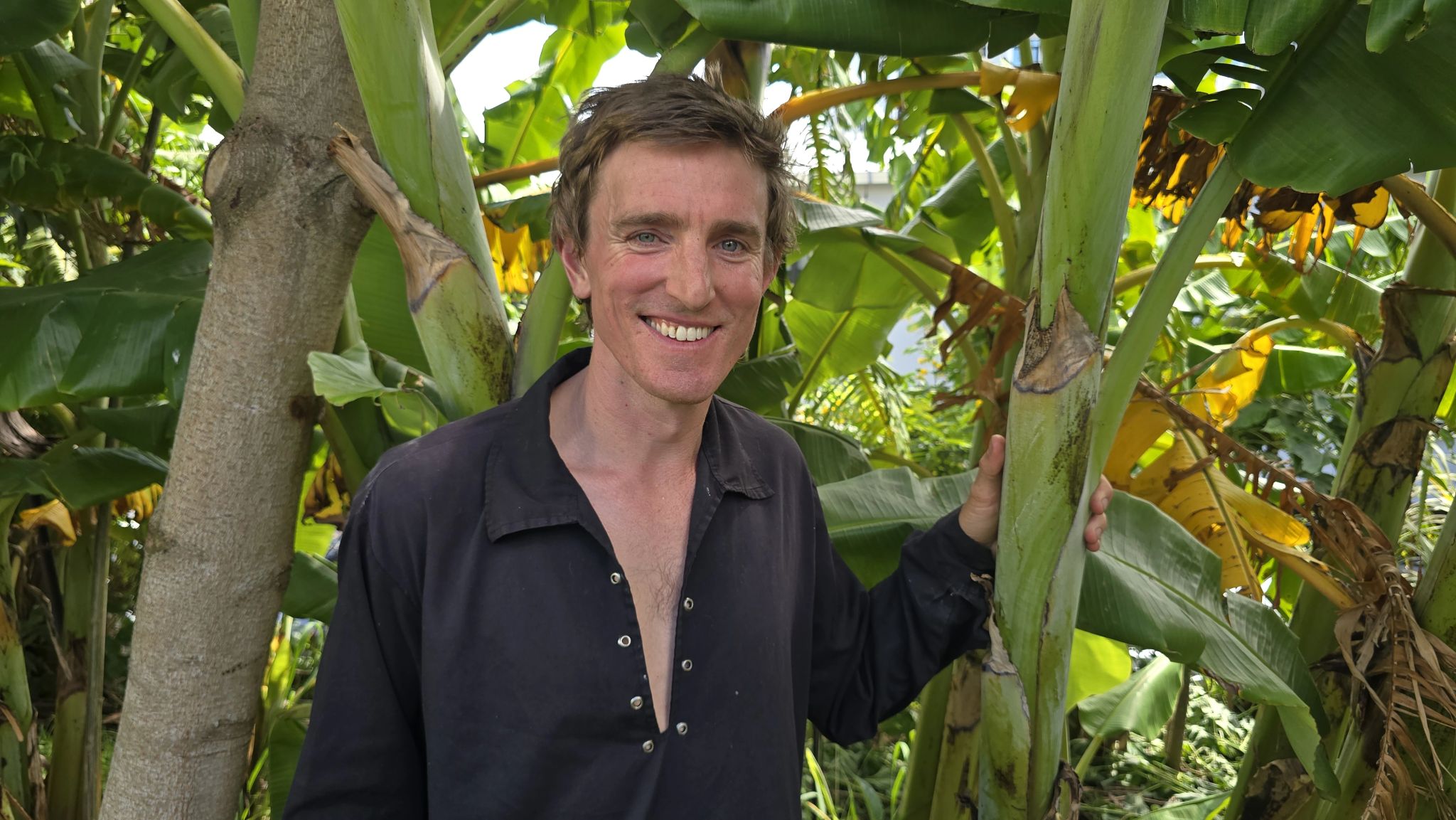
What if growing a food forest wasn't about buying more plants, but about learning how to make more plants yourself?
In this episode of White Strawberries, I’m talking with regenerative grower, teacher and Delicious Revolution founder Levi Brinsdon-Hall about seeds, propagation and the deeper thinking behind food forests.
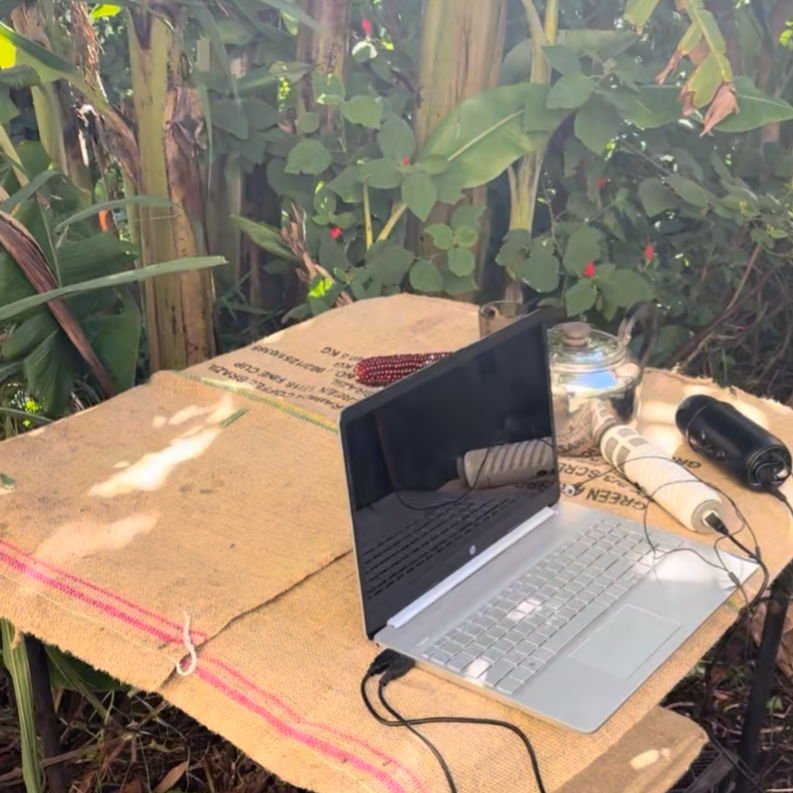
We recorded this conversation on site, surrounded by a food forest in the heart of the city. And as we walked around, we ended up talking about something much bigger than simply how to grow more food.
Levi sees learning to grow from seed as one of the most important skills a gardener can develop. Once you can propagate plants yourself, you’re no longer dependent on buying seedlings every time you want to expand your garden. You have the means to create plants, experiment, observe what thrives on your land and gradually build an ecosystem of your own.
We also talk about why a food forest isn't just about growing food for humans. Flowers, trees, cover crops and plants we might never eat ourselves all have roles to play in a living ecosystem.
And perhaps most importantly, Levi talks about the shift from trying to control a garden to observing what is already happening and learning from it.
About Our Guest
Levi Brinsdon-Hall is a regenerative grower, teacher and founder of Delicious Revolution.
His work focuses on helping people develop practical growing skills and reconnect with the abundance and possibility held in seeds, propagation and diverse growing systems.
In this conversation, Levi shares ideas developed through years of growing, teaching and working with food forests. He talks about starting with annual vegetables, moving into perennial systems, understanding individual plants and using observation to work out what belongs in a particular landscape.
You can find Levi on Instagram and LinkedIn, and learn more about his work through Delicious Revolution.
Why this Conversation Matters
We can buy almost everything we need: seedlings, mature plants, compost, fertiliser and growing systems. It makes gardening easier to start, but it can also mean we never learn some of the fundamental skills that allow us to create plants ourselves.
For Levi, growing from seed changes that.
A seed isn't just the beginning of a plant. It represents a cycle: growing, harvesting, saving, propagating and beginning again.
That idea becomes particularly powerful when you're establishing a food forest. Rather than seeing a food forest as a collection of expensive plants that need to be purchased and maintained, Levi sees it as a developing ecosystem that becomes increasingly self-sustaining over time.
The gardener's role changes too.
Instead of asking only, What do I want to grow?, we can start asking:
What is already thriving here? What can I learn from it? And what does this particular piece of land need next?
Key Takeaways
1. Learning to propagate gives you independence
Once you can grow plants from seed and take cuttings, you're no longer completely dependent on buying plants.
Propagation becomes a lifelong gardening skill that can be used to create more plants and expand an ecosystem.
2. A seed represents a whole cycle
Levi describes gardening as a series of cycles: seed, plant, harvest, seed again.
Saving and growing from seed allows that cycle to continue and gives gardeners the opportunity to adapt what they grow to their particular location and needs.
3. Plants aren't only valuable when we can eat them
A food forest isn't simply a supermarket growing underground.
Flowers, trees, cover crops and other plants can provide food and habitat for insects, birds, soil organisms and other parts of the ecosystem.
4. Diversity can benefit the gardener too
Sam reflects on seeing more flowers and biodiversity in her own garden and noticing how that diversity creates benefits for the plants she actually wants to grow.
The ecosystem isn't necessarily separate from our needs. Supporting more life can also support the food, flowers and other things we enjoy growing.
5. Start with what gives you a quick win
Levi encourages new growers to begin with something that will motivate them to keep going.
For one person that might be flowers. For another, it might be a fast-growing radish.
The important thing is to create an early experience of success.
6. Plants can be tools for rebuilding an ecosystem
Rather than seeing compost, fertiliser or raised beds as the primary tools, Levi encourages gardeners to think about living plants themselves.
Dense, diverse plant growth can help create the conditions for a more complex living system.
7. Observe before assuming you know
One of the strongest themes in this conversation is that every piece of land is different.
What grows well on someone else's property, or in a book, isn't necessarily what will thrive in your garden.
Planting, watching and adapting gives you information that no general gardening guide can provide.
8. A food forest changes over time
The work required in the early years of a food forest is different from what is required once the system becomes established.
The aim is not simply to create a garden that looks like a mature food forest immediately. It's to establish a system that can develop and become increasingly abundant over time.
9. Know your plants as individuals
Levi encourages growers to look beyond simply seeing "green."
A banana, broccoli and passionfruit might all photosynthesise, but they have very different needs and characteristics.
Getting to know individual plants more deeply is part of becoming a better grower.
10. Growing can be an act of participation
Perhaps the most philosophical idea in the conversation is that growing gives us a way to participate in the living world.
A handful of seeds can become a living, food-producing ecosystem.
For Levi, that's part of what makes growing so powerful.
Ideas and Concepts Discussed
From buying plants to creating plants
There is a big difference between having access to plants and knowing how to produce them.
If you're establishing a garden slowly, buying a few plants at a time can make sense. But propagation opens up another possibility: growing many of the plants yourself.
That can mean letting plants self-seed, saving seed, taking cuttings or dividing established plants.
Sam's example of yarrow is a simple illustration of this. A single plant can become many when you understand how that particular plant reproduces.
Plants as part of a wider food system
Levi's definition of food is deliberately broader than food for humans.
A plant can feed soil life, insects, birds and other parts of the ecosystem. A flower can support pollinators even if it never becomes part of your dinner.
This is particularly relevant when thinking about food forests, because a diverse ecosystem has many relationships happening simultaneously.
The importance of green, living growth
Levi argues that a productive garden should contain plenty of living, photosynthesising plants.
Rather than thinking only about what to add to the soil, this approach asks what can be grown in it.
Cover crops, annual vegetables, perennials and other plants can all become part of the process of building a living system.
Year zero is different from year eight
A newly established food forest needs a different approach from an established one.
In the beginning, there may be bare or compromised soil to work with, weeds or existing vegetation to manage, and a lot to learn about the site.
Levi describes using diverse cover crops and vegetables to begin establishing the system, before gradually building towards a more perennial food forest.
Over time, the balance changes.
The established system can provide more of its own fertility, more shade and more habitat, while requiring less annual replanting.
Observation as a gardening skill
One of the most useful ideas in the conversation is that gardening knowledge isn't only something you can learn from books.
Your own garden is constantly giving you feedback.
What survived? What grew exceptionally well? What struggled? What appeared without you planting it? What seems to thrive in the conditions you have?
Those observations can gradually become a much more useful guide to your garden than trying to follow a universal recipe.
Diversity and resilience
Levi sees diversity as fundamental to a healthy ecosystem.
Different plants contribute different things. Some provide flowers, some habitat, some edible crops and some biomass. Different plants also interact with different parts of the soil ecosystem.
Rather than trying to design every element perfectly from the beginning, the approach is to establish diversity, observe what happens and allow the system to teach you.
A Final Thought
I loved the idea that learning to grow from seed is a little bit like learning to fish rather than simply being given a fish.
Once you have that skill, you can keep creating.
And perhaps that's one of the most exciting things about gardening: you don't have to start with a perfect garden, a big budget or hundreds of plants.
You can start with a seed.
This Spring Levi is resourcing 1000 young growers and their schools and families with free resource packs.
SUBSCRIBE & REVIEW
If you loved this episode, please take a moment to subscribe and leave a review on Apple Podcasts!! Your support helps us reach more gardeners who need these insights. 🎙 Thanks for tuning in to The White Strawberries Podcast! See you next week!