What to Fill a Raised Garden Bed With
Answering Becky's question about planting dahlias in a new bed, Episode 57, November 4, 2026
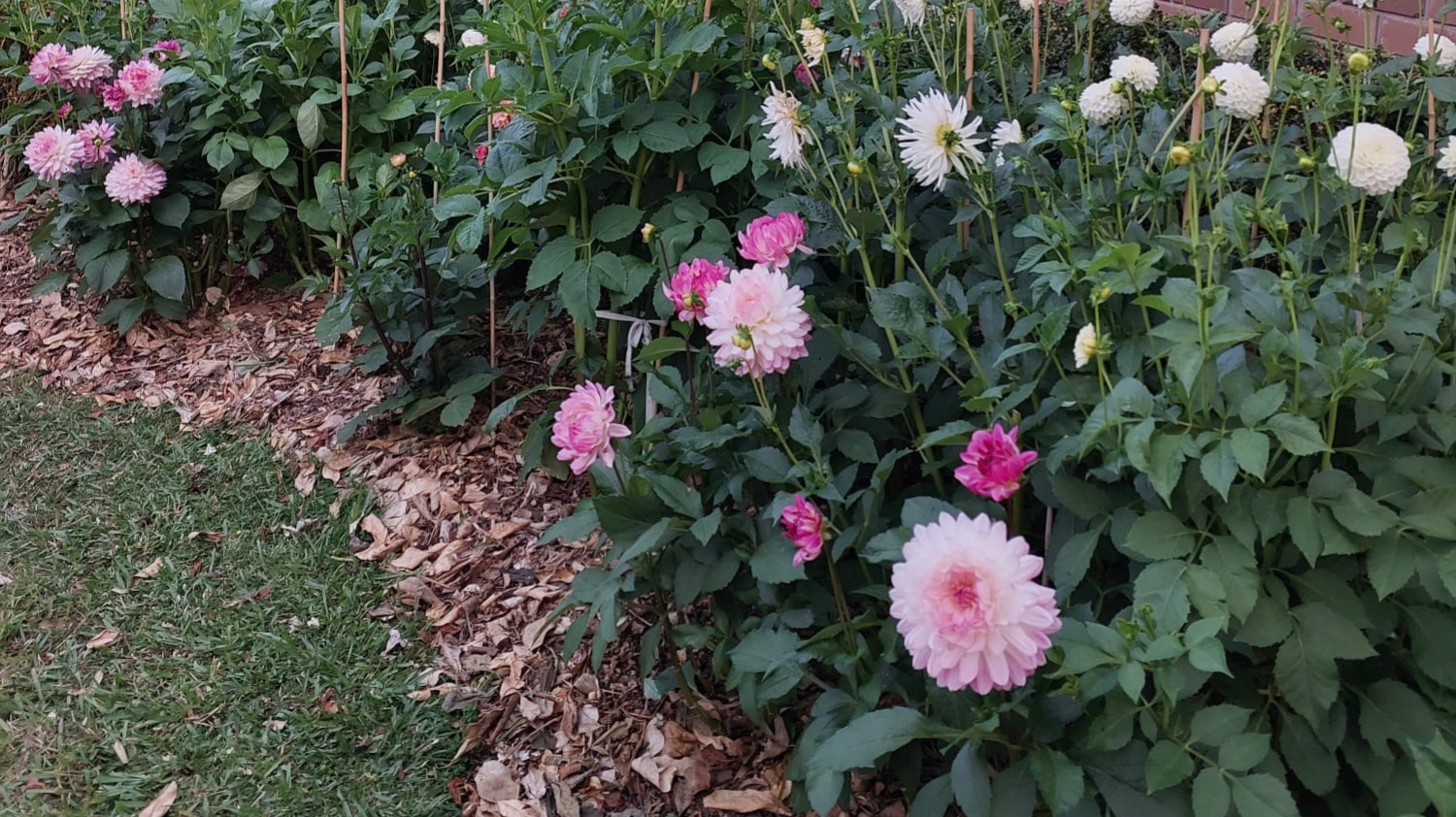
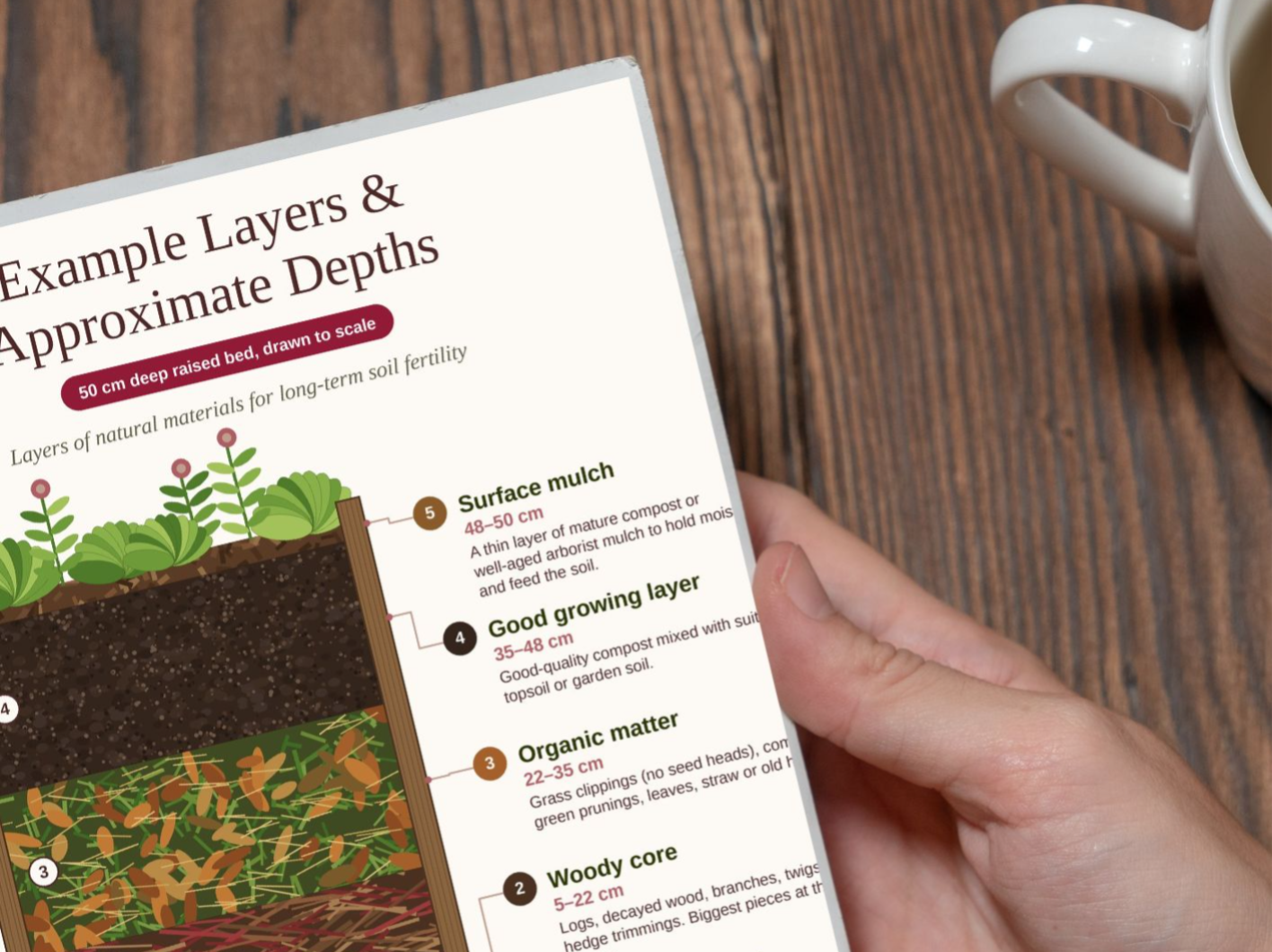
There's a visual guide to accompany this episode with examples of 50cm high bed and 1metre high bed. You can have it in your inbox for free.
The short answer
Kill the grass with wet brown cardboard, then fill the bed in layers: big logs, smaller woody material, other organic matter, add a growing layer (you can use purchased garden mix here, but add at least 20% of living compost) , and put some mulch on top.
You do not fill the whole bed with garden mix.
The Longer Answer:
Becky wants a new garden bed. Her plan is to mark out a circle, put down cardboard, add mulch and whatever leaves she has, mix in compost from her bin and some sheep manure pellets, then pile soil on top.
She is almost exactly right. This episode and guide covers the tweaks, how to work out how much garden mix to order, and the extras you can add if you want to go further. This method is often called a sandwich bed because of the layers. In Germany a similar method is called Hügelkultur.
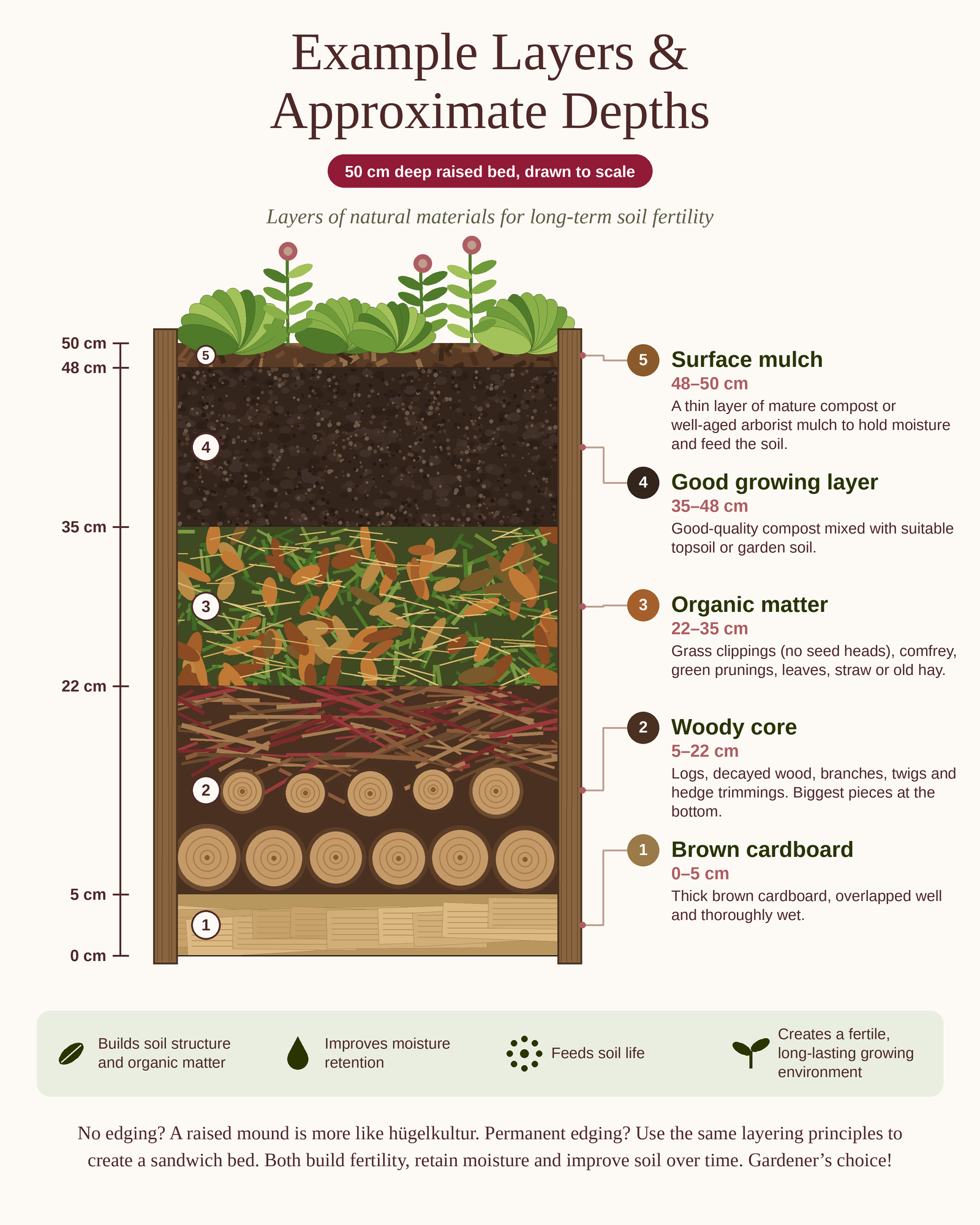
On the Left is an image of how a LIVING garden bed could be made. The Visual Guide goes into more depth.
You can purchase garden mix or compost from a store, but it's likely to be weed free (a good thing) but also without much life.
The sterilising process to make soil weed free also kills much life.
So the Good growing layer needs at least 20% living compost! Make it yourself or find someone that does 👌
Optional Additives if you wanna GO NEXT LEVEL
If the layers above are enough for one weekend, go and build the bed. These extras are optional.
pH test kit. Tells you your soil pH. Useful for perennials such as trees and blueberries. Dahlias like slightly acidic to neutral soil, so Becky will check she's got that right. . About $10 for a meter or powder test. Search the pH your plant needs. Then have a look below and
Garden lime. Raises pH and supplies calcium, which much New Zealand soil lacks. Add it into the layers if you want a more alkaline soil. It also turns hydrangeas pink rather than blue.
Wood ash. A natural source of potassium that slightly raises pH. Only use ash from clean wood, never from burnt plastic.
Manure. High in nitrogen, which balances all the woody carbon in the bed. Use chicken or ruminant manure (sheep or cattle) and keep it under 5% of the whole bed. Sheep pellets are fine. Listen to the Animal Manure episode for more.
Seaweed. Trace minerals that even good compost can lack, and most useful for edibles. Rinse it, then add it to a layer. Keep it under 10% of the bed, and rinse well if you use a lot. Check it is legal to collect where you live.
Lawn clippings. A high-nitrogen green material. Sprinkle them through the layers, never thick, and make sure there are no seed heads. Thick layers go anaerobic and smell.
Comfrey, dogwood and yarrow. Deep roots mine minerals and store them in the leaves. Cut comfrey leaves with hedge trimmers about four times a year, not in winter, and add them to the layers. There is more in the Free Guild Guide above.
Biochar. Very high surface area, so it holds nutrients. Charge it first: soak it for 48 hours in worm tea, or add it to your compost layers. Uncharged, it does nothing for plants.
Garden mix and compost for the growing layer
Litres to buy for a 10 cm deep growing layer, with 20% compost and 80% garden mix.
Your own bed size? Length in metres × width in metres × 100 = litres of growing layer at 10 cm deep. Then take 20% of that for compost and 80% for garden mix.
Deeper or shallower layer? Length × width × depth in cm × 10 = litres of growing layer.
Lots of compost? Use half and half instead. For a 2.4 m × 1.2 m bed that is 144 L of garden mix and 144 L of compost.
Garden mix calculator
Change the bed size to see how many litres to buy. The numbers start with an example bed.

Join my garden list
When I create a new resource or develop a new course, you'll be the first to hear about it!