Episode 48: Jo Duff: How to Grow a Food Forest in a Temperate Climate
July 15, 2026

There is something fascinating about walking onto a piece of land that looks like “nothing” and imagining what it could become.
A bare paddock can become a place filled with food, shelter, biodiversity, and memories — but it rarely happens overnight.
It requires observation, patience, experimentation, and a willingness to learn from the land itself.
When Jo Duff and her family first moved onto their 16-acre property in Hawke’s Bay, there was no driveway, no buildings, no water infrastructure, and no established garden. It was a blank canvas.
Over the past 20 years, that land has become Kahikatea Farm — home to an organic nursery, a three-acre food forest, and a landscape shaped by permaculture principles, careful observation, and plenty of trial and error.
In this conversation, Jo shares what she has learned from creating a food forest in a temperate, dry climate — including why she would plant more densely if she started again, how swales have helped capture rainfall, and why a food forest is about much more than producing food.
One of my favourite ideas from this conversation was Jo’s description of wanting to create a place where she could be part of the landscape — not simply somewhere to walk out, pick an apple, and leave.
This episode is a beautiful reminder that gardens are not just productive spaces.
They are places we build relationships with.
About Our Guest
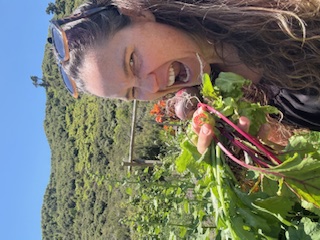
Jo Duff is the co-founder of Kahikatea Farm, a food forest nursery and education space based in Hawke’s Bay, Aotearoa New Zealand.
Jo and her family began developing their property over 20 years ago, starting with 16 acres of bare land. Over time, they have transformed part of this land into a three-acre food forest, alongside an organic nursery growing edible, medicinal, and useful plants.
One of the things that makes Kahikatea Farm unique is the way plants are organised by their function — not simply by how they look.
Visitors can explore plants based on uses such as:
- edible plants
- medicinal plants
- biomass plants
- nitrogen-fixing species
- support plants for food forest systems
Through years of observing plants in their own landscape, Jo shares practical insights into what thrives in a Hawke’s Bay climate and how different plants contribute to a wider ecosystem.
Key Ideas From The Conversation
Start with observation, not a planting list
One of the first things Jo and her family did after moving onto their property was simply spend time there.
Before planting or building, they observed the land — where water pooled, where sheltered areas formed, where they naturally wanted to spend time, and how the property changed through the seasons.
This reflects a key permaculture principle: understanding a place before making major changes.
As Jo explains, it is easy to copy ideas from other gardens, but every property has its own conditions. Soil, rainfall, slope, climate and existing ecosystems all influence what will work.
A food forest is more than fruit trees
When Jo first planned the food forest, they originally thought of it more as an orchard.
However, they knew they wanted more than a collection of fruit trees. They wanted the different layers and functions found in natural ecosystems — including support plants, ground covers, nitrogen-fixing plants and species that could contribute fertility and biomass.
Jo explains that their nursery reflects this approach by organising plants around their function rather than simply their appearance.
A plant might provide food, medicine, habitat, biomass, fertility or multiple benefits at once.
Swales can help capture water — but they are not a recipe
Jo shares how swales have worked on their property to capture rainfall and support tree growth.
On their land, with dry periods, heavy rainfall events and clay soils, the swales help slow water movement and allow it to soak into the landscape.
However, Jo is careful not to suggest that everyone should simply copy what they have done.
The success of earthworks depends on many factors, including soil, slope and climate. As Jo says throughout the conversation, it always comes back to context.
Plant densely and think about the whole system
One of Jo’s reflections from two decades of growing a food forest is that she would plant more densely if starting again.
She explains that there were periods where spaces between plants meant there was less photosynthesis happening in the system.
Through learning more about approaches such as syntropic agroforestry, Jo has become interested in using more plants — including plants grown specifically for pruning, biomass and soil-building functions.
The goal is not simply filling space, but creating a living system where plants support each other.
SUBSCRIBE & REVIEW
If you loved this episode, please take a moment to subscribe and leave a review on Apple Podcasts!! Your support helps us reach more gardeners who need these insights. 🎙 Thanks for tuning in to The White Strawberries Podcast! See you next week!